
Finding Taylor Resident Records
Taylor keeps no single all-purpose list of residents. The trail depends on the fact already in hand. An address belongs first with property, tax, and parcel systems. A public case belongs with the court search. A death or marriage question has a county or state vital-record route. A past family may surface through a library collection. It may also surface through a deed, or a dated public notice. Each source names a role: recorded owner, taxpayer, court participant, registrant, or applicant. None of those labels alone proves a person lived at an address.
Start with the least intrusive official source. Add records only as needed to check a result. A same-name match needs a second fact. That could be the municipality and year, a legal description and parcel, or a court number and court. Note the search date. Also note the kind of result. It may be an index, an image, a staff response, or a certified copy. That habit matters. A public index can omit documents, and a current record can change.
- For a Taylor address, search the county tax view or Taylor assessment route and save the parcel and situs labels.
- Compare that result with the parcel map, then use the recorded-owner or legal-description fields to reach the deed index.
- For a name and a public case question, search MiCOURT and confirm the court, year, party role, and case number before treating a result as relevant.
- For an older household, ask the Taylor library or historical society about original materials and test the municipality line in every regional directory.
- When an online source does not hold the needed record, use the custodian's phone, mail, counter, or Michigan Freedom of Information Act procedure rather than guessing.
Taylor Offices Behind Resident Records
Taylor municipal records and Wayne County records sit in different offices. The Taylor Assessors Office handles local assessment questions. It also links to the city's BS&A Online entry point. Wayne County keeps the land-record archive and the publicsearch deed route. The Taylor City Clerk runs local election administration. Voter-record procedure comes from the Michigan Department of State. The Taylor street directory follows the address chain in more detail.
Wayne County Register of Deeds
400 Monroe Street, 7th Floor
Detroit, MI 48226
313-224-5850
Taylor Clerk and Michigan Elections
23555 Goddard Road
Taylor, MI 48180
734-287-6550, option 6
Taylor Parcel Labels Matter
The Taylor Assessors Office is the local entry point for assessment records and BS&A Online. Questions and record requests go by phone, email, or the city contact form. Its stated response target is seven business days. BS&A is the city-linked route for current tax, assessing, detailed-record, property-sale, and delinquent-personal-property searches. The live Taylor result screen is not published, so read a field label from the portal rather than assuming it.
For a county-side lookup, Wayne County Tax View accepts parcel, owner, street, city, and ZIP inputs. Use street and ZIP together to narrow results. An assessment label is not a residency label. A taxpayer, mailing recipient, and recorded owner can be different people or entities. Compare the result with the parcel map and deed record before drawing any conclusion.
The Taylor assessor page gives the city entry point. It directs record questions to the office. No page promises that every property detail is online.
Use the office contact route when a label needs clarification. A missing field on the web result is another reason to call.
Taylor Deed Index Access
The Wayne County Register of Deeds calls itself the county land-record library. Its parcel-history references reach to 1703. That archival depth differs from the online service. Routine search and copy availability runs back to January 1, 1960. The free public index is mainly a grantor and grantee name route. Paid on-demand access adds address, legal-description, parcel or tax-ID, liber or page, and image options.
A grantor conveys an interest. A grantee receives it. Those parties show a legal transaction, not a present household. Record the document type, recording date, and effective date if displayed. Also record the document number or liber/page, legal description, and image status. Check the Register's current page before counter, mail, or certified-copy work. Appointments have been required for in-person service since October 1, 2025. The fee schedule changed effective January 1, 2026.
Taylor Voter Record Boundaries
Michigan's Qualified Voter File is maintained by local and county clerks with the Bureau of Elections. Voter-registration records are public by request under the Michigan Freedom of Information Act. Core identifying and contact fields stay protected. The state lists the non-public fields. They include driver-license and state-ID numbers, month and day of birth, phone, email, digitized signature, and the last four digits of a Social Security number.
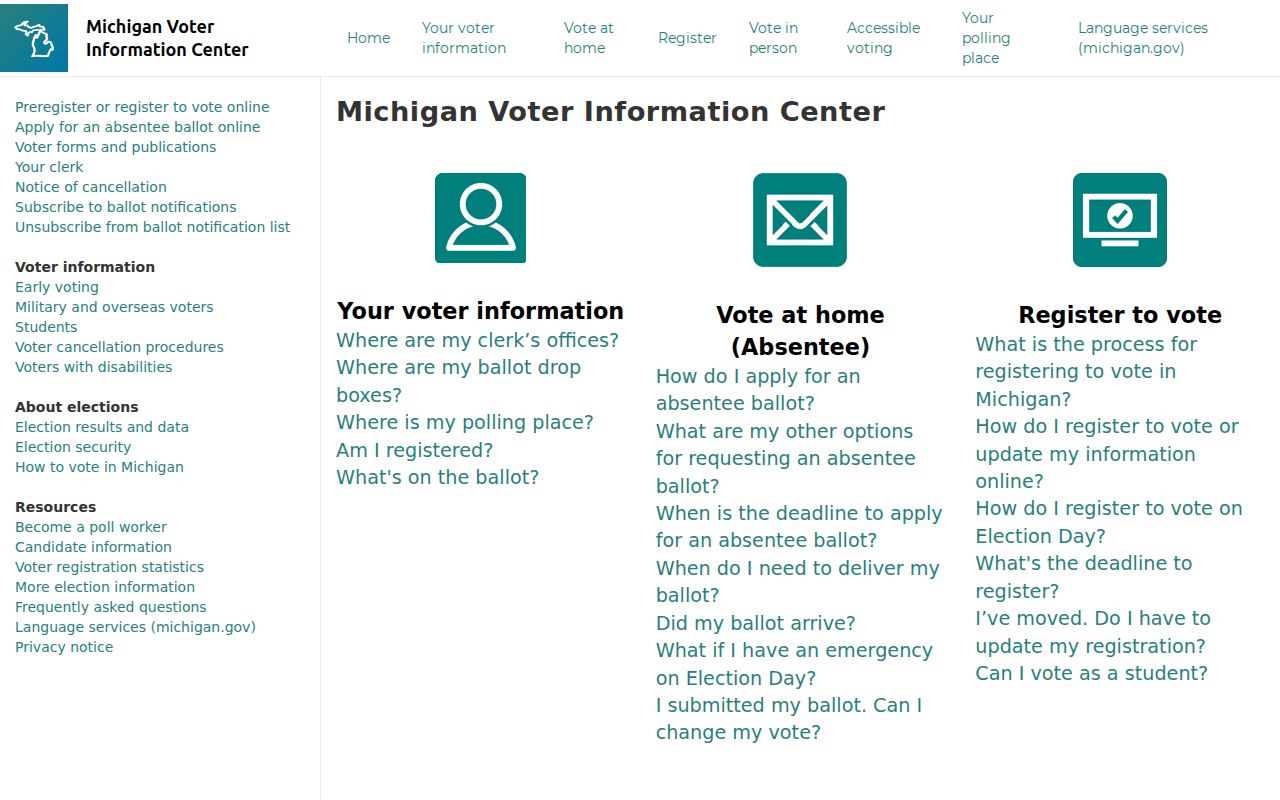
Voter rolls are election records. The Michigan Voter Information Center is the public lookup entry point. It does not support arbitrary name browsing. For broader permitted data, the state QVF form offers geographic choices including state, county, jurisdiction, district, school, village, ward, and precinct. Delivery runs by pickup, FTP, or mail. Ask before assuming a field is searchable. The Michigan voter lookup is one access route, not proof that every public QVF field appears in its web interface.
Ask the Taylor Clerk or the Bureau of Elections. Either can say which route holds the exact record and current format.
Current Taylor Resident Sources
Taylor splits its current-resident information across systems built for different purposes. A property roll describes a parcel, not a household. A deed index lists the parties to a recorded instrument. Voter records mix public and protected fields. A municipal staff directory names city personnel rather than the wider community. The Taylor library, city archive, and historical society can still surface local leads. None functions as a current household database for the city.
| Taylor source | Recorded role | Custodian | Access route |
|---|---|---|---|
| Tax View and assessment | Taxpayer or owner label, parcel and address | Taylor and Wayne County | Portal, office, phone, or city contact form |
| QVF procedures | Permitted registration and status data | Michigan elections offices | MVIC or a records request |
| Register deed index | Grantor, grantee, document facts | Wayne County Register of Deeds | Free name index, paid options, counter or mail |
| Taylor staff directory | City staff and departments | City of Taylor | Online department directory |
| Library and history leads | Historical references and local context | Taylor Library and Historical Society | Catalog, archive, visit, or contact |
Pick the route that fits. Address, court, vital, and history records each answer a different question. For verifying one person across sources, work record by record instead of system by system.
Taylor Court Name Checks
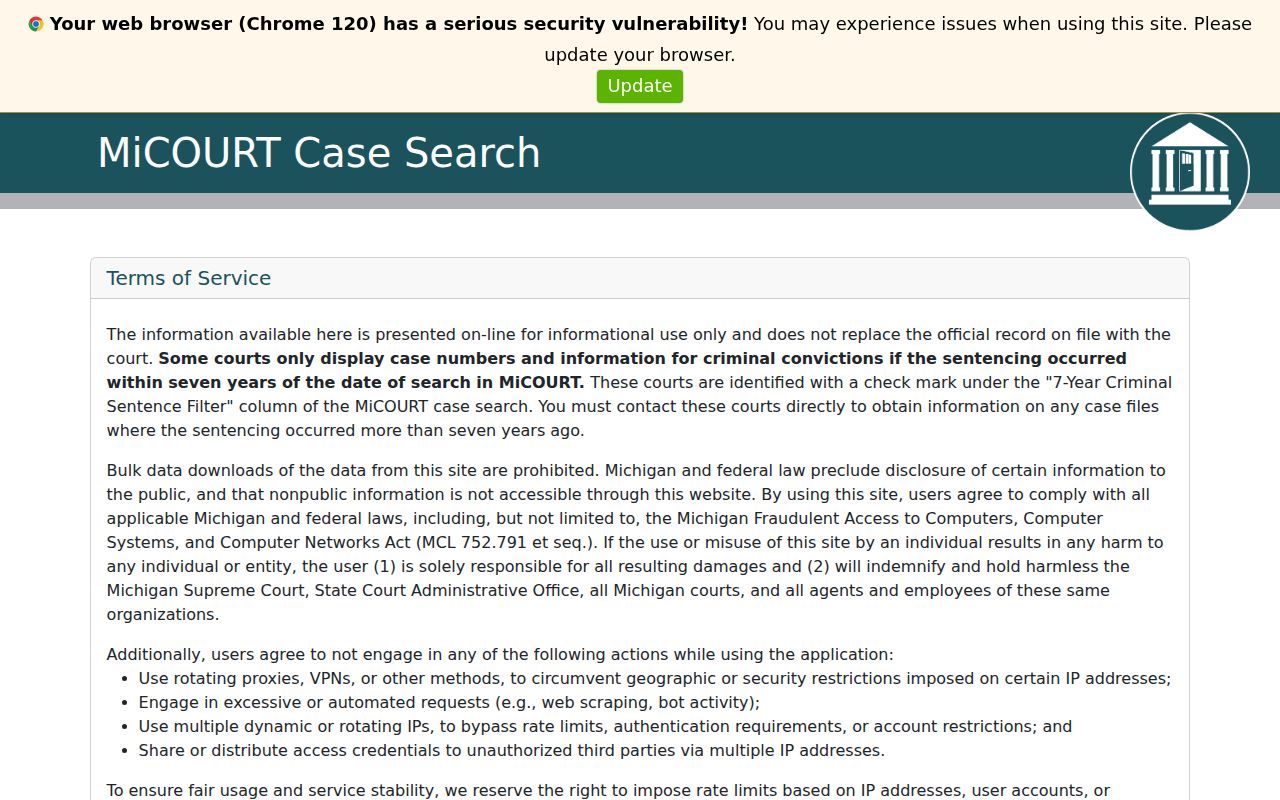
Taylor's quick links send public case searching to Michigan MiCOURT for the 23rd District Court. The court sits at 23365 Goddard Road. Its docket covers civil cases, small claims, traffic matters, municipal infractions, and misdemeanors. MiCOURT is informational only, not a certified court record. Older, sealed, suppressed, juvenile, adoption, name-change, and personal-protection matters may be excluded. So a no-result never proves that no record exists.
The published query model allows free text, first and last name, full name, case number, case type, year, status, and filing or disposition date ranges. A hit can show the case number, court, participant role, case type, status, and dates. Certified copies stay with the court or clerk. The MiCOURT case-search screen is a starting point only.
Match the court, year, and party role before calling a name hit a Taylor match.
Taylor Vital Record Routes
The Michigan Department of Health and Human Services holds state vital records for events on file from 1867. Divorces are listed from 1897. Orders go through mail, an authorized online service, phone, a drop box, or an appointment. Birth records under 100 years carry eligibility limits. Death, marriage, and divorce records follow separate rules and products. Taylor sits outside Detroit. The Wayne County Clerk may therefore hold county-community birth or death transcripts and marriage certificates. Taylor itself offers a local certified-death-record route for deaths in the city.
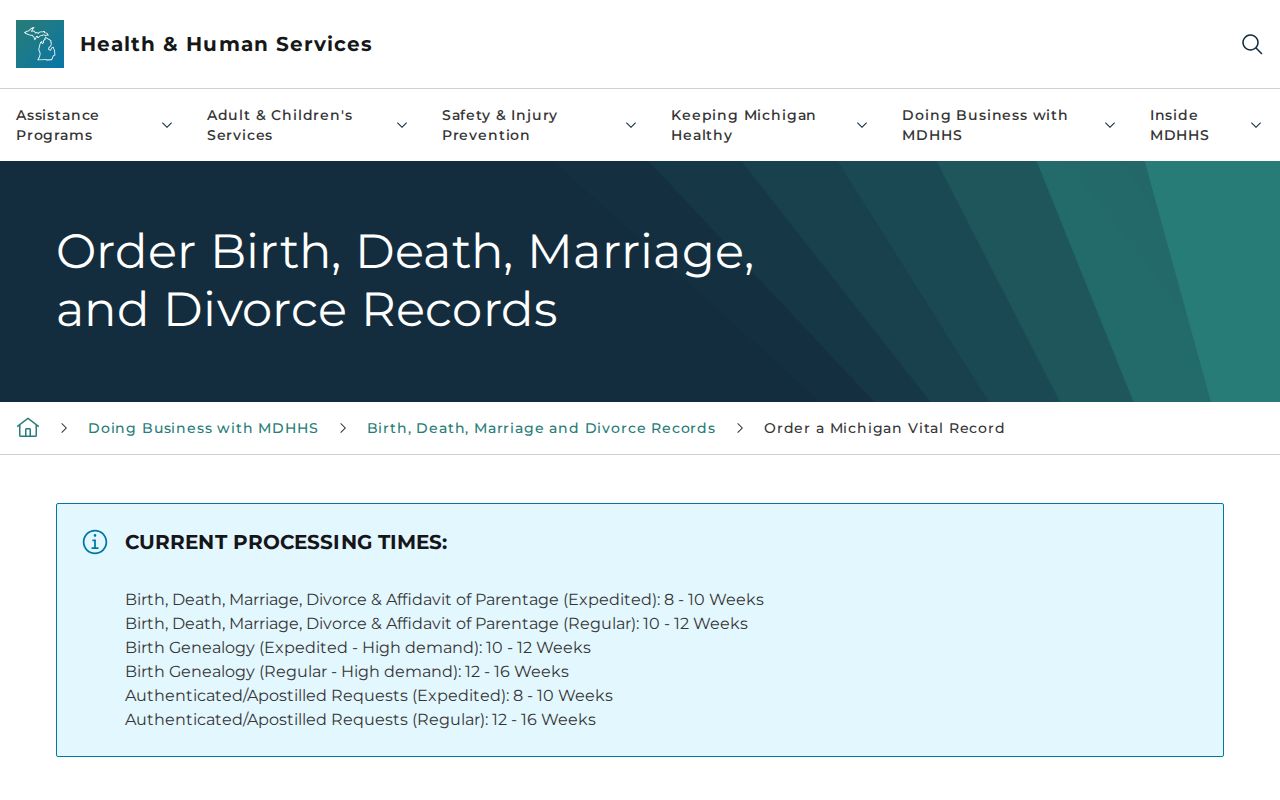
These channels should not be merged silently, because fees, eligibility, and record scope differ. MDHHS lists regular, expedited, genealogy, and authenticated processing tracks. Its vital-record ordering page shows the state route. Confirm the custodian and the event date. Check the relationship or eligibility, the ID rule, and current payment instructions before sending an application.
A genealogy index or transcript can point toward a record. It cannot replace the certificate or the custodian's confirmation.
Taylor Township Search Dates
Dates change the best repository. The University of Michigan's digitized 1876 atlas records that Taylor Township was created from Ecorse in 1847. That preserves early settlement context. County material says residents voted to incorporate as a city in May 1968. The charter followed in 1969. Older documents may therefore say Taylor Township. A newer office, directory, permit, or public notice uses the city name.
That jurisdiction shift is a useful checkpoint for a historical name or parcel. Compare the municipality printed on the original item first. Then weigh the year, legal description, and surrounding county context before joining records. The Taylor city archive supports keyword, archive, time-period, and date-range searching for civic context. But it is a publication archive rather than a resident record database.
Historical Taylor Directory Leads
Taylor has no known city-directory publisher or year-by-year run for its own shelves. That gap matters for anyone tracing past residents of Taylor. The Taylor Community Library's Omeka archive supports Keyword, Boolean, and Exact searching across Item, File, and Collection records. Yet its holdings are mostly board-meeting minutes rather than a resident directory. The Taylor Historical Society offers Cemetery Committee, Historic Buildings, In Memory, and Blog leads. But there is no public year catalog or searchable directory.
The Library of Michigan explains how historical directories can be arranged. They may be sorted by surname, street, or telephone number. Detroit and Wayne-area collections may help. Still, a regional directory is not proof of Taylor coverage. Check the address and municipality in the original volume. The Taylor city directory collections page gathers the historical shelf, archive, and regional substitute details. It puts them in one place.
Taylor BS&A Search Limits
Taylor routes its property work through BS&A Online. The municipality landing page is the right entry point. It covers current tax, assessing, and detailed-record searches. Property-sale and delinquent-personal-property searches run through it too. Access can depend on the browser or session. Follow the portal's own directions, or call the Assessors Office rather than filling gaps from an unrelated source. A live parcel view should distinguish the parcel number and situs address. It should also show the mailing address and taxpayer or owner label. The legal description belongs there as well, and so do assessed and taxable value, tax year, and transfer history. The Taylor BS&A landing page confirms the municipality entry point.
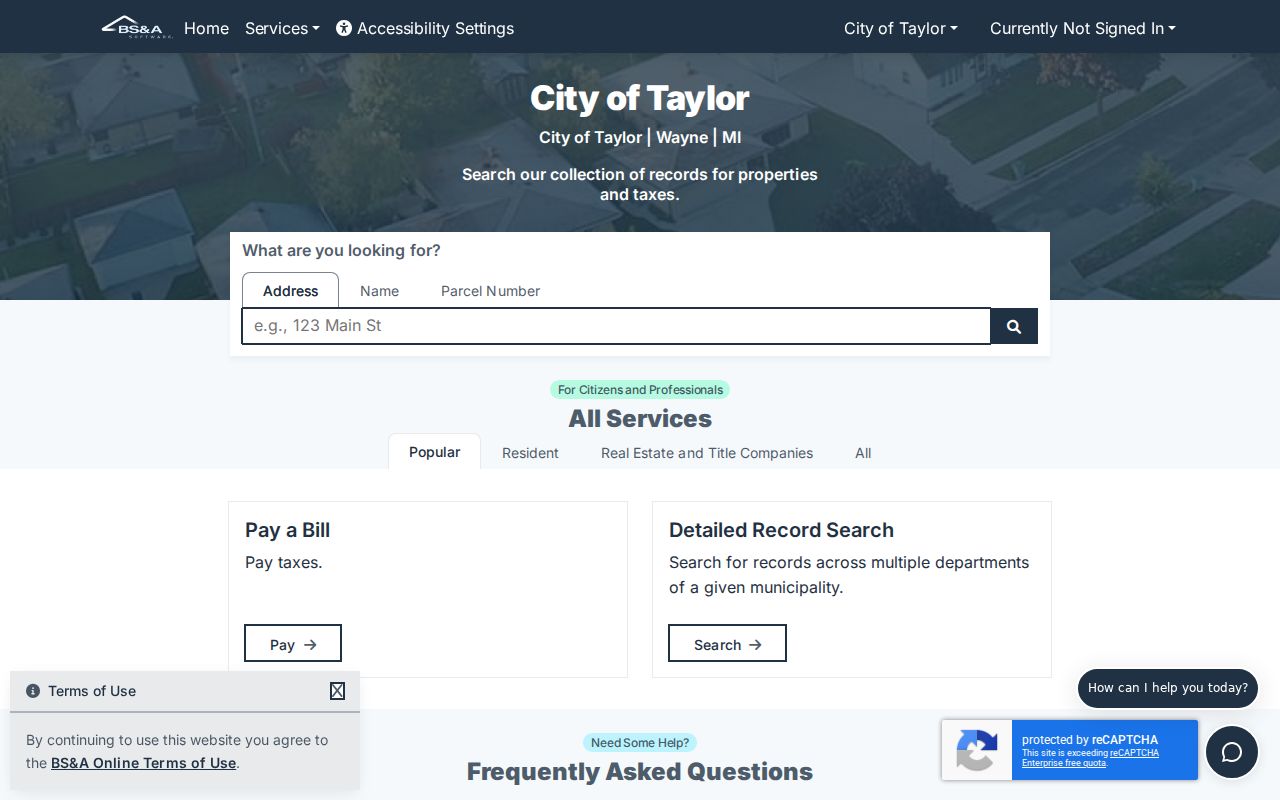
Those labels describe different record roles and should be preserved as displayed.
Taylor Court Access Channels
The Taylor court quick-links page gathers the local connections in one spot. It points to the 23rd District Court and to the statewide MiCOURT search. That gives residents two ways in. The public docket display is the faster channel for recent matters. Older files, certified copies, and anything missing from the online display need a call or visit to the court or the right clerk. Wayne County's Records Division covers certain Circuit civil, domestic, and historical criminal ranges, and its current records page spells out the in-person, mail, and email or payment steps. Treat the link collection as routing, not proof. For an official copy, go to the court or records office itself.
With a common name, keep the court, year, participant role, and case number attached to any search result.
Taylor Privacy Stop Signs
Michigan records stay public only as far as each law and custodian permits. That limit matters for Taylor residents. The Michigan Address Confidentiality Program serves people at risk from domestic violence, sexual assault, stalking, or human trafficking. It provides a designated address and a mail-forwarding route. Participants can ask that it be used for voter registration. Do not attempt to reconstruct a hidden address by piecing together property, voter, court, or map data.
Lawful use. Taylor record searches fit genealogy, reconnecting, civic transparency, and personal safety research. Do not use a name, address, or record result to stalk, harass, intimidate, or harm anyone.
A wrong record goes back to its custodian. Ask that office about its correction, redaction, amendment, or records-request process. Michigan FOIA requires a requester to describe an existing record well enough to find it. The law does not force an agency to build a private-person dossier. Nor does it unlock a protected field.
Records missing from the internet still have a path. The Wayne County FOIA form sends county-held material to the county coordinator. It also routes requests through the online request portal. State and city requests belong with the agency holding the actual record. A written request may return a fee estimate. That estimate can cover search, examination, review, separation, duplication, or mailing. Michigan agencies usually answer within five business days. A permitted ten-business-day extension can stretch that. Help the custodian by narrowing the request to a record type. Include a date range, department, address, or file number. That way the office locates an existing record instead of compiling a new list.