
Taylor City Directory Sources
No Taylor-specific printed city-directory run, publisher, or year span was verified in this research. That is an important result, not a dead end. Taylor Community Library, the Library of Michigan, Detroit-area collections, and the Taylor Historical Society each offer a different route to test. Start by asking for a catalog record or volume title, not by assuming a regional book includes Taylor. A city directory entry is strongest when its original image gives both the address and the municipality.
| Collection or lead | Verified dates or range | Holder or route | Access status |
|---|---|---|---|
| Taylor Community Library and Omeka | No Taylor directory run identified | Library and digital archive | Library visit, staff request, or online archive search |
| Library of Michigan directory collection | Multiple publishers; Taylor years unconfirmed | State guide, catalog, and MEL research | Catalog-led research |
| Detroit regional volume | 1857-1858, 365 pages | FamilySearch catalog | Digitized regional item; access may require an account or library route |
| Burton Historical Collection resources | Wayne death index, 1934-1939; coroners' files, 1865-1906 | Detroit Public Library guide | Confirm the catalog item and reading-room access |
| Library of Congress directory guides | City directories chiefly 1861-1960 | LOC guides and metadata | Selective digitization and collection discovery |
| Taylor Historical Society | No public directory years listed | Society contact route | Ask about holdings, appointments, and reproduction |
The strongest Taylor result may therefore be a verified regional volume, a catalog lead, or a local-history referral rather than a ready-made municipal database. Record the repository, year, page, and whether the item is an index or a scanned page. Those details let a later researcher reproduce the search.
Taylor Library Directory Leads
Taylor Community Library is the first local desk to contact about unlisted print holdings, local-history material, and access to research databases. It is at 12303 Pardee Road and lists 734-287-4840. Its posted hours are Monday through Thursday from 10 a.m. to 8 p.m., Friday and Saturday from 10 a.m. to 5 p.m., and Sunday closed. Library cards are free for people who live, work, or learn in Taylor. The library also identifies Michigan eLibrary resources and in-library Ancestry Library Edition.
The Taylor Community Library page provides the local access route shown here.
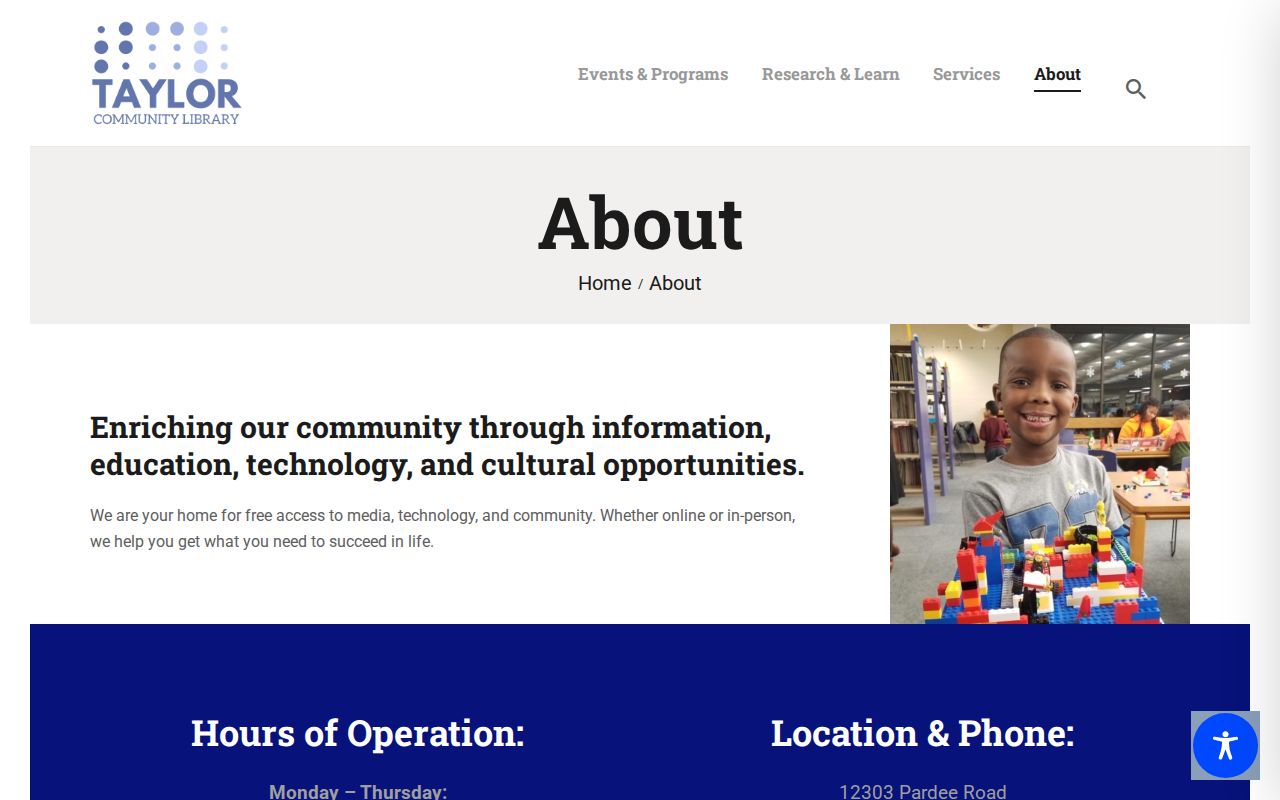
Call or visit with a surname, street, approximate year, and a request to check local-history shelves, off-site material, scanning rules, and any directory holdings. The research did not verify a Taylor directory from this page, so staff confirmation remains necessary.
For a person or house search, ask whether material can be searched by street, whether a reverse section exists, and whether a librarian can identify the publisher and the dates held. A clear request saves time: give the old and current municipality labels if the time period crosses the city charter.
Taylor Directory Search Limits
The Taylor digital archive supports Keyword, Boolean, and Exact modes, along with Item, File, and Collection choices, Advanced Search, and browse controls. Its visible material includes board-meeting minutes. That makes it useful for a dated street project, public building, civic organization, or municipal action. It is not a verified Taylor resident directory, reverse directory, or obituary index.
The archive's search screen shows the available local-history search controls.
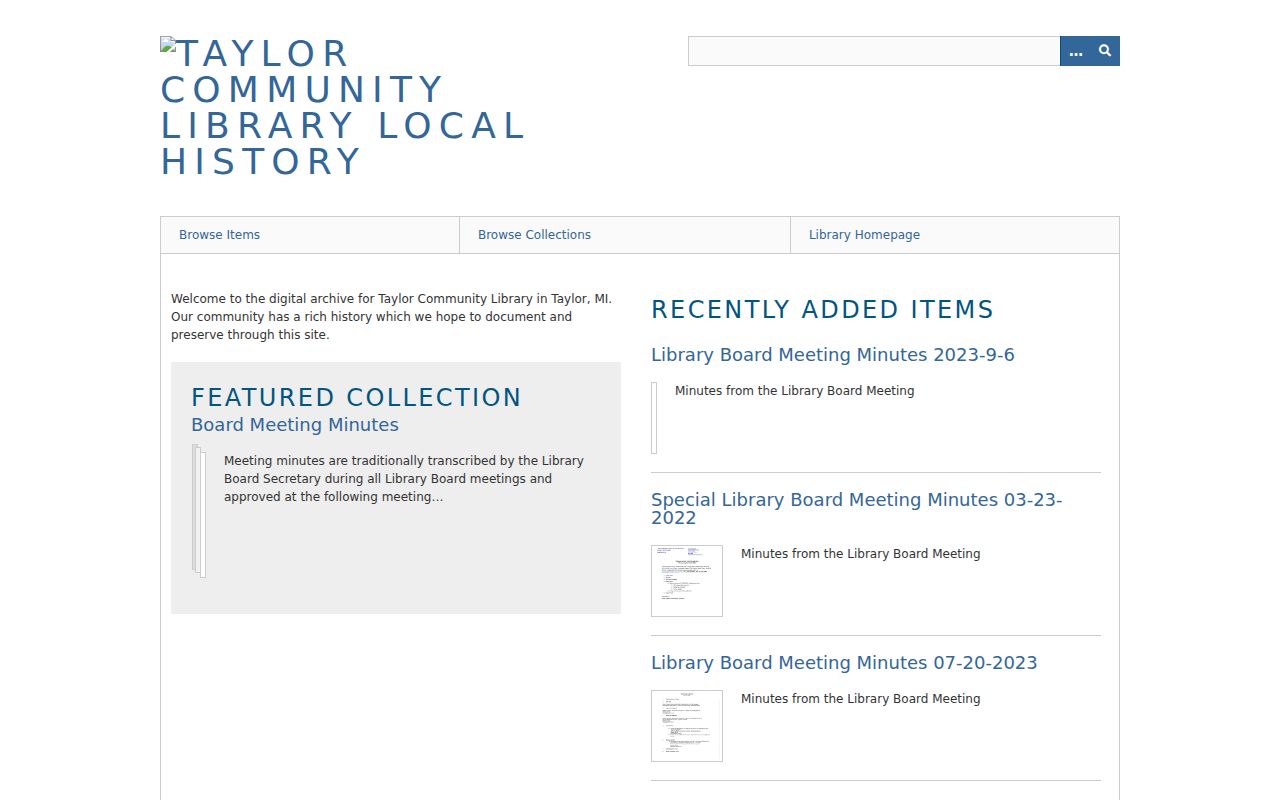
Use Exact mode for a distinctive street or place name, then inspect the item itself before drawing a conclusion. Board minutes can provide context, but an incidental name does not establish where someone lived.
The Taylor city archive offers Keyword, Archive, Time Period, Start Date, and End Date controls for community reports, budgets, public reports and notices, and Taylor Today. It is another source for dates and civic context, not a substitute for a directory entry.
Note: A local archive hit needs support from the original item and a second record before it is used as household evidence.
Regional Directories Near Taylor
The only actual directory item verified here is a FamilySearch catalog item for a Detroit volume, listed as 365 pages for 1857-1858. It is a useful regional example, not proof that Taylor is covered. Access can depend on a free FamilySearch account or a library setting. Read the address and municipality line on the page before treating a Detroit-area entry as a Taylor result.
The FamilySearch catalog record documents the regional Detroit directory example.
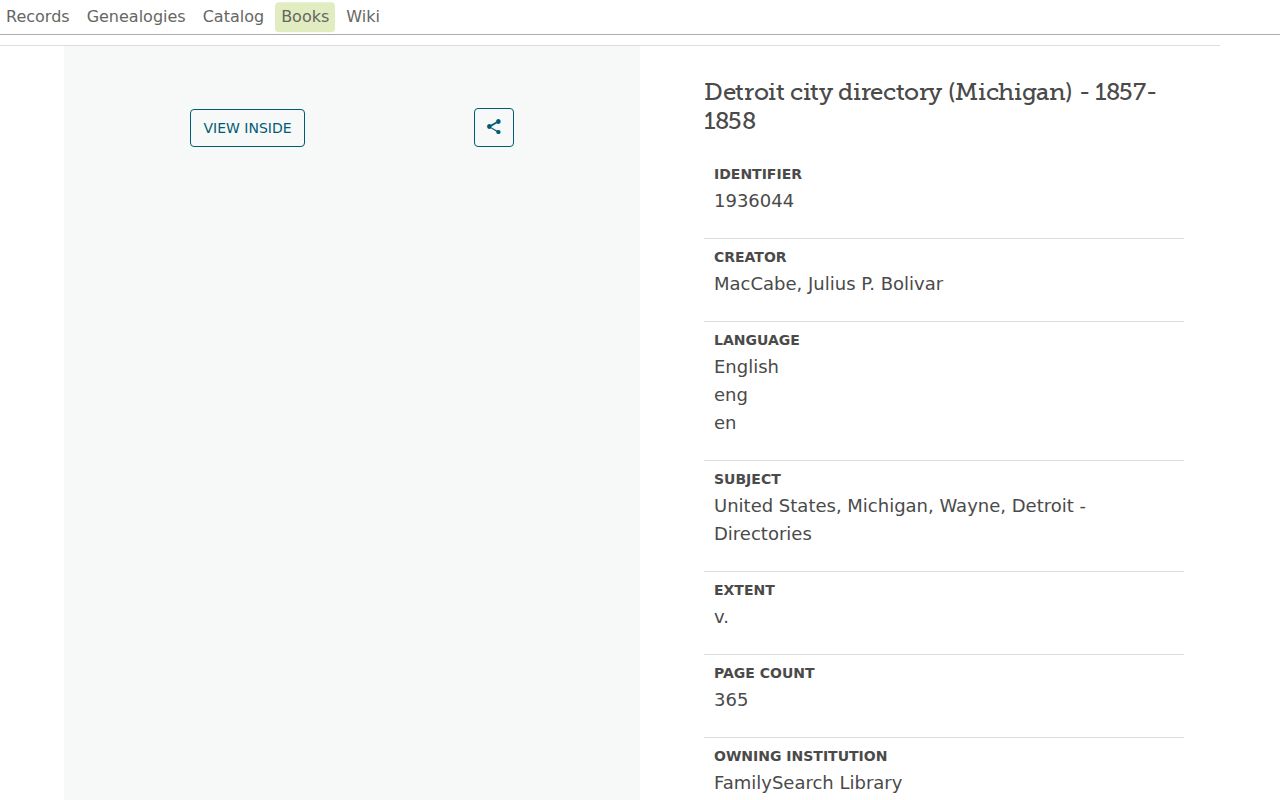
This item illustrates why location checks come before name matching. A regional directory can help with an address, occupation, or associated household, while still falling outside Taylor's municipal boundary.
The Burton Historical Collection resource guide identifies Detroit directories and Wayne County research leads, including coroners' files from 1865 to 1906 and a Wayne death index from 1934 to 1939. Confirm the scope and access rules of a specific catalog item before relying on it.
Taylor Township Directory Labels
A historical search needs the right jurisdiction label. The University of Michigan's digitized 1876 atlas reports that Taylor Township was created from Ecorse in 1847. Wayne County's Taylor profile says residents voted to incorporate as a city in May 1968 and the city was chartered in 1969. A record before that change can use Taylor Township even when the place is now known as Taylor.
This distinction is especially useful when comparing a directory catalog, a census schedule, an old deed, or a city notice. Search both Taylor Township and Taylor, then preserve the form used by the original source. The 1968-1969 transition is a jurisdiction checkpoint, not proof that every record series changed all at once.
For early land clues, the 1876 Wayne County atlas supplies historical context. It should be used as a period source, while a directory image, deed, or census record supplies the address-level confirmation.
Reading Taylor City Directory Entries
A city directory is a lead, not a final identity decision. The Library of Michigan explains that surname order may provide a name, occupation, household members, ownership information, and related personal details. The details actually printed depend on the volume. Because no Taylor-specific run was verified, no assumed abbreviation, owner symbol, or household format belongs in a Taylor example. Photograph or save the volume's key and page citation before extracting facts.
| Name line | Check spelling, initials, and any stated household relationship against the original page. |
|---|---|
| Street or address | Confirm the municipality and compare the address with a second dated source. |
| Occupation or related detail | Use only when it is printed in the volume and preserve the source wording. |
| Ownership reference | Read it as a directory label, then confirm title through a recorded instrument if needed. |
| Volume citation | Keep the publisher, year, page, repository, permalink or call number, and index-versus-image status. |
- Criss-cross directory
- An address or street-order section, when a volume includes one, that can be used to locate listings by place rather than surname.
- Householder index
- An alphabetical arrangement by household lead, when the publication uses that arrangement.
- Abbreviation key
- The publisher's legend for short forms, if a volume prints one. Read it before interpreting a line.
Note: An index transcription is helpful for discovery, but the scanned page carries the address and context needed for careful comparison.
Taylor Directory Street Methods
The Library of Michigan directory guide describes three useful arrangements: surname order, street order, and telephone-number order. Street order is usually alphabetical by street and then house number. Telephone order can support a reverse search where a phone book provides it. These are research methods, not a claim that every Taylor volume exists or has every section.
The state directory guide explains the surname, street, and telephone access paths.
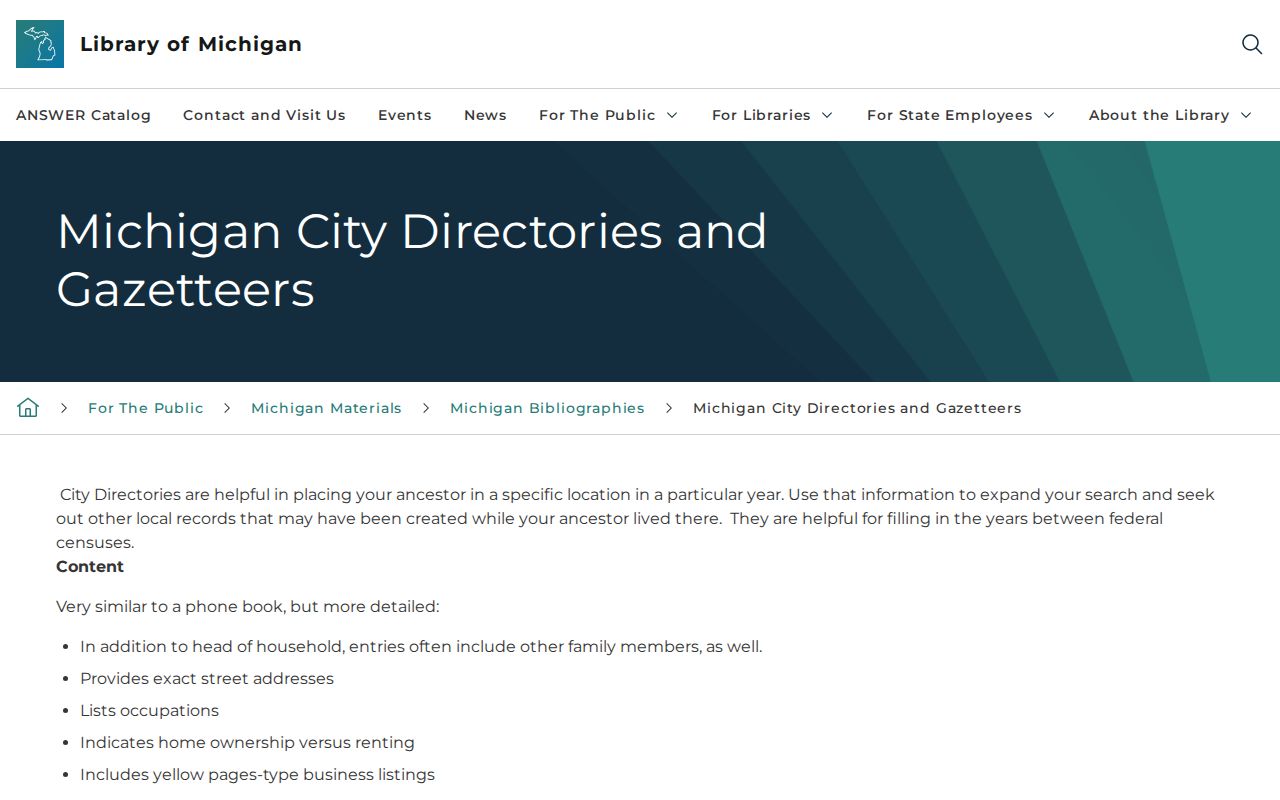
The guide is a sound way to frame a library question: ask whether the library has surname, street, or telephone order for the requested year, and whether a regional volume includes Taylor.
The Library of Congress address-directory guide explains that these books are mainly from 1861 to 1960, with gaps and selective local coverage. It also notes that reverse lookup varies by volume. A researcher can request a paper slip in the Science and Business Reading Room with the type, location, and year, subject to the guide's 40-per-day limit and its recommendation for 24-hour advance notice.
Trace Taylor Directory Households
Use directory years to build a dated sequence, then pair them with the federal census and local records. The National Archives explains the 72-year census release pattern, and 1950 materials are available in the current release cycle. A gap between directory years does not prove a move. It can reflect missing publication, a different municipality label, an unlisted household, or a collection that has not yet been cataloged.
- Write down the exact surname, initials, street, municipality label, and year from the first original entry.
- Search the prior and next available years, including Taylor Township where the date requires it.
- Check a street or telephone-order section only when that volume actually contains one.
- Pair the dated sequence with the available census and compare the full address, not a name alone.
- Use a deed, cemetery, obituary, probate, or court record to corroborate a move, relationship, or death event.
When the question turns to a present address and its property trail, use the Taylor streets directory for the current parcel, tax, GIS, and deed sequence. Historical directory pages and modern property records answer different parts of the question.
Taylor Directory Research Gaps
The Taylor Historical Society preserves Taylor people, government, organizations, and history and lists Cemetery Committee, Historic Buildings, In Memory, and Blog sections. Its public pages do not supply a searchable directory catalog, directory years, research fee, or reproduction schedule. Its published email is taylorhistoricalsociety@gmail.com. Contact the society for a cemetery, building, family, or organization lead, while allowing for volunteer scheduling and a possible appointment.
The Taylor Historical Society site is the local-history contact route represented here.
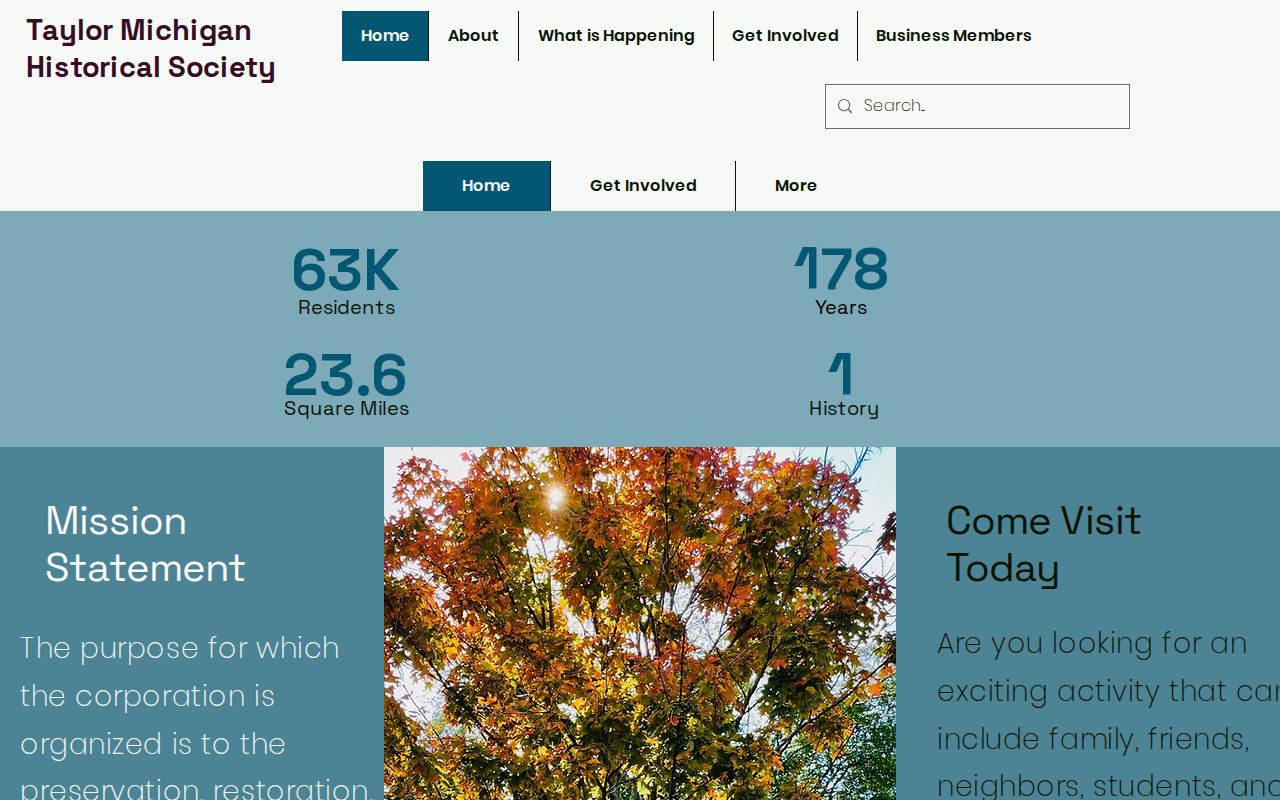
The society can add local context to a search, but its public navigation does not establish an indexed resident collection. Ask what is held, which years are covered, whether a record is an original or index, and whether copies can be made.
No official Taylor obituary index, municipal resident register, or Taylor-specific directory publisher/year run was located in this research. Treat those absences as a reason to verify with the library, society, and regional catalogs, not as a reason to fill the gap with an unverified listing.
Note: A confirmed holdings list is stronger than a promising menu label, especially when no year-by-year catalog is public.